Maritime Museum: a new room tells the story of Leonardo and Garibaldi's "passages" in Cesenatico
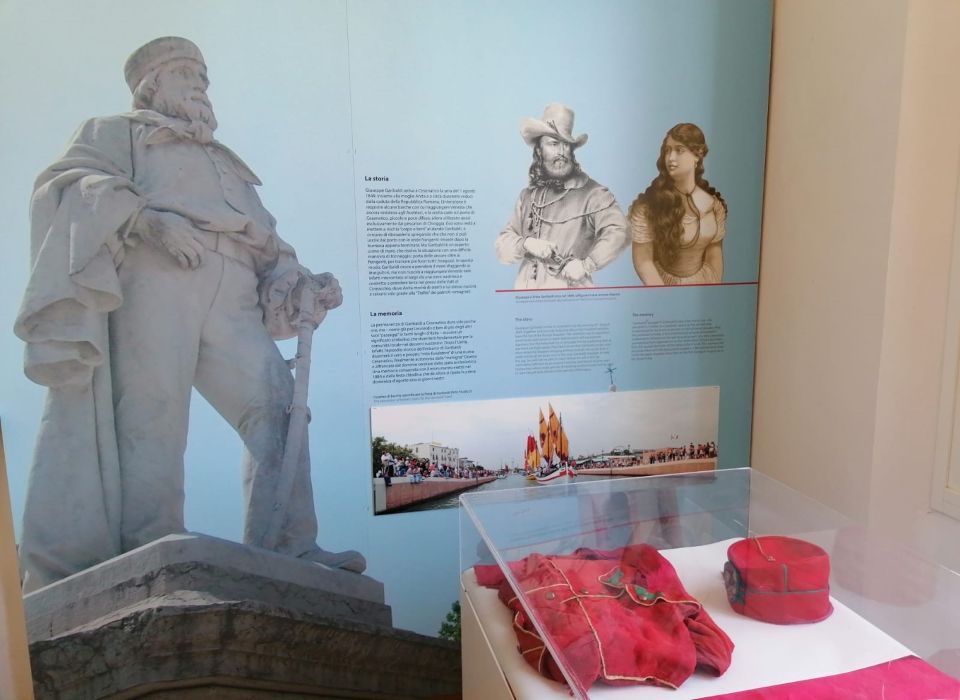
Cesenatico's history has been marked by two important “passages”: that of Leonardo da Vinci, on September 6, 1502, for the inspection of the port on behalf of Cesare Borgia, evidenced by the two famous drawings in the “Codex L”; and that of Giuseppe Garibaldi together with Anita and about two hundred followers, who on August 2, 1849, embarked on some bragozzi in an attempt to reach Venice. Two very brief but extremely important moments for collective memory and for the construction of a civic identity, which are now recounted in a new dedicated room within the Municipal Antiquarium, the museum that collects archaeological and historical testimonies of Cesenatico and its territory, located in the building of the former Retirement Home for the Elderly adjacent to the Maritime Museum, to whose visit path it is internally connected.
Inside the room, a display case will also show the reproduction of the “Codex L” with Leonardo's drawings, while on the “Garibaldian” side, some photographs and objects from the Repubblica Fadigati archive, donated by his nephew Maurizio Carati, will be exhibited, testifying to the personal story of a woman deeply connected for family and ideological reasons to the figure of Giuseppe Garibaldi.
Admission to the new rooms is allowed with the entrance ticket to the Maritime Museum which includes a visit to the internal pavilion, the Antiquarium, and the naturalistic section.