An itinerary from the Ridracoli Dam to the Casentinesi Forests
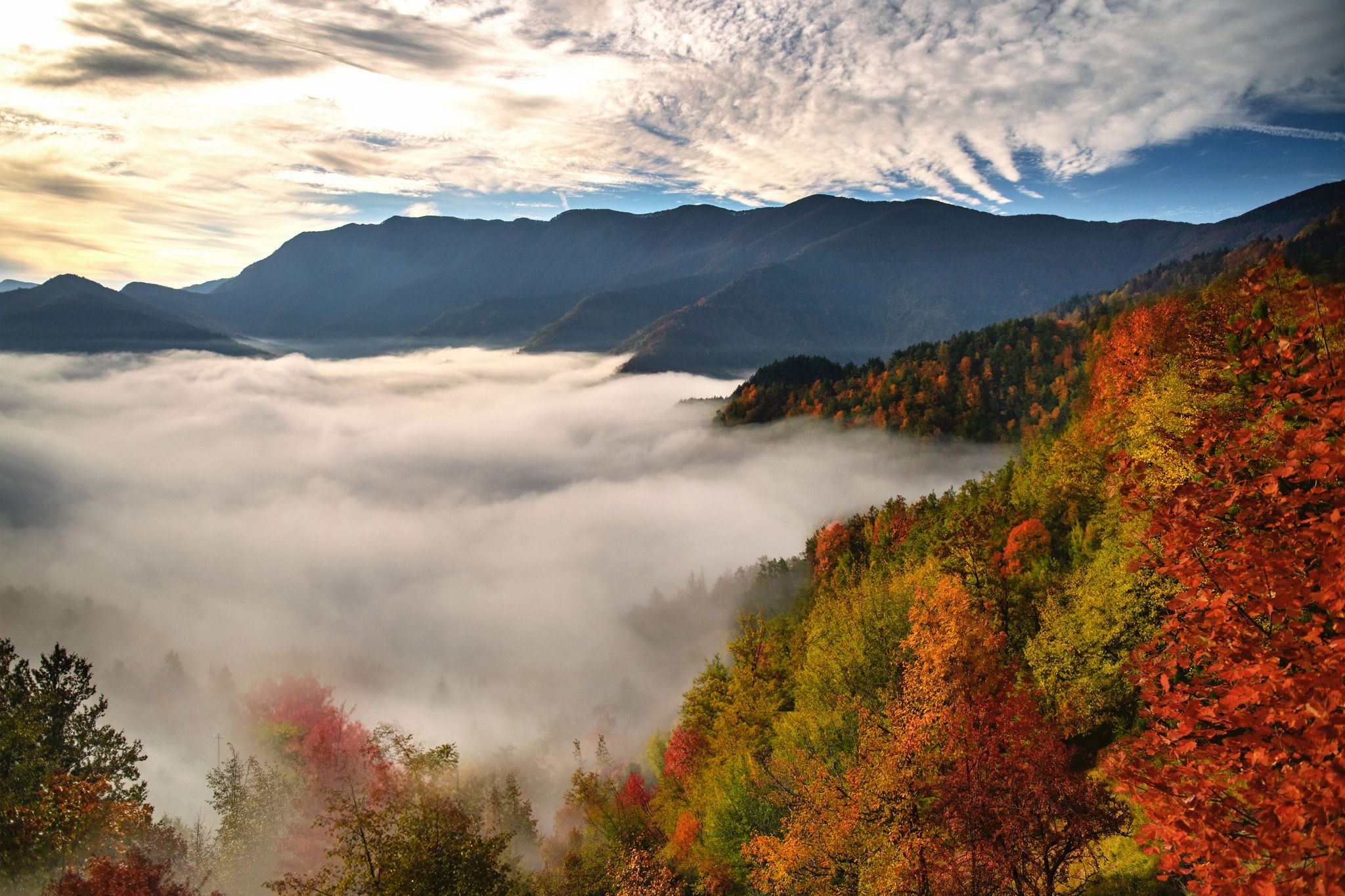
If you dream of a day immersed in one of Emilia Romagna's most important green lungs, the Casentinesi Forests Park, this is the itinerary you're looking for: among the waters of the Ridracoli Dam, the villages lost in nature, and the woods of Monte Falterona, where you can encounter all the animals of the Tuscan-Romagnolo Apennine fauna.
Let's look at the stages together: Cesenatico - Cesena - Forlimpopoli - Santa Sofia - Ridracoli - Corniolo - Campigna - Cesenatico (approx. 150 km)
How to do it: recommended itinerary to be done by car; the visit requires a full day.
Detailed itinerary: from Cesenatico take the SS 304 for Cesena; continue on Via Emilia to Forlimpopoli, then turn left for Santa Sofia and continue along the road that runs alongside the Bidente river. After a detour to Ridracoli, return to the SS 310 until you reach Corniolo and Campigna.
SANTA SOFIA: a frontier land rich in history and ancient castles, it is home to the Community of the Casentinesi Forests Monte Falterona and Campigna National Park. In addition to its urban layout, which features Palazzo Giorgi and the Church of S.ta Lucia, the Apennine Flora Garden of Valbonella in Corniolo is worth a visit.
RIDRACOLI: the large artificial lake of the Ridracoli Dam, an important work of Italian engineering completed in 1982, covers an area of approximately 100 square hectares, with a capacity of 33 million cubic meters of water. The large arch dam, measuring 103.5 meters in height and 432 meters in length, serves the Romagna Aqueduct, which supplies water to 48 Romagna municipalities, following the ancient route of the Roman aqueduct commissioned by Emperor Trajan. The dam and the annexed Naturalistic Museum can be visited on holidays and pre-holidays throughout the year and every day during the summer, when boat trips on the lake are also possible.
CORNIOLO: is an excellent starting point for excursions and walks in these valleys rich in history and nature: a small paradise for trekking lovers who can retrace ancient mule tracks in an almost untouched natural environment.
CAMPIGNA: its ancient forest, to which the Monks of Camaldoli, the Opera del Duomo of Florence, and the Grand Duchy of Tuscany, who owned it until the Unification of Italy, dedicated special care, still preserves today some of the tourist and scenic routes created in previous centuries. The eighteenth-century grand ducal palace, now converted into a hotel, was a hunting residence for the House of Lorraine. The forest of beeches and firs that covers a large part of the valley was recognized in 1976 as a biogenetic natural reserve, with the aim of preserving a highly representative section of the Apennine mountain landscape.
CASENTINESI FORESTS NATIONAL PARK of Monte Falterona and Campigna: it extends over a vast territory (approximately 37,000 hectares) straddling Romagna and Tuscany. It was established in 1993 and its history is millennia-old. 80% of the surface is covered by forests, varying according to altitude and climate, ranging from giant firs to centuries-old beeches. From a faunal point of view, the park hosts approximately 160 species, including over 80 birds, almost 40 mammals, and 30 amphibians, reptiles, and fish. Among the most significant specimens to remember are: the wolf, the deer, the fallow deer, the mouflon, and the eagle. Numerous and fascinating itineraries are possible within the park, including: the Acquacheta waterfall, the Benedictine monastery of Camaldoli, and the Franciscan monastery of La Verna.
Photo Casentinesi Forests National Park