The historic sails of the Cesenatico Maritime Museum
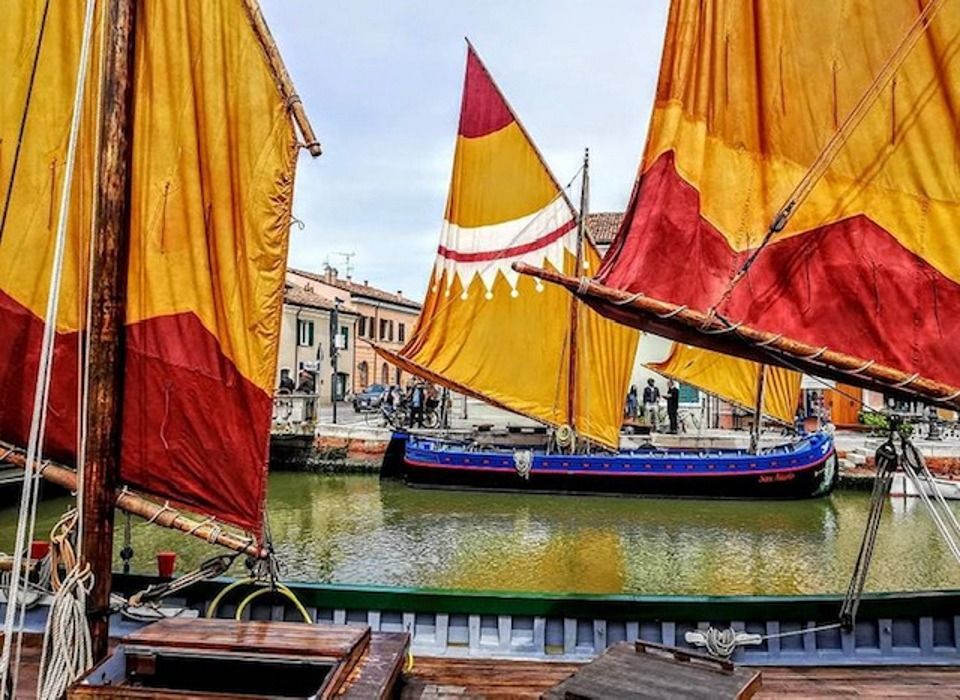
Historic sails. Colors, fabrics, symbols of sailors' families. It is one of the most evocative themes of traditional seafaring: the colorful and decorated lug sails that gave rise to a true "heraldry of the sea" in the Adriatic.
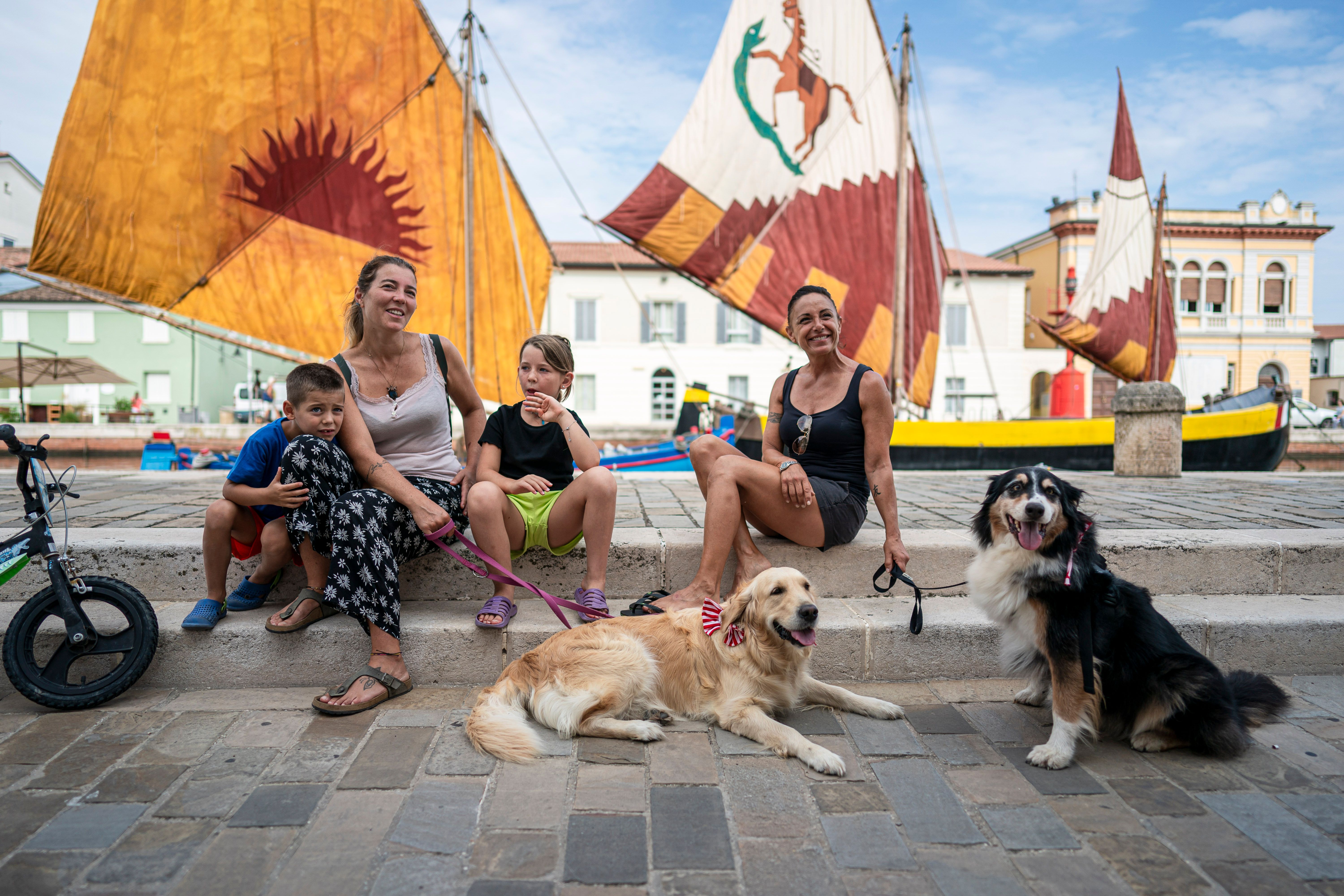
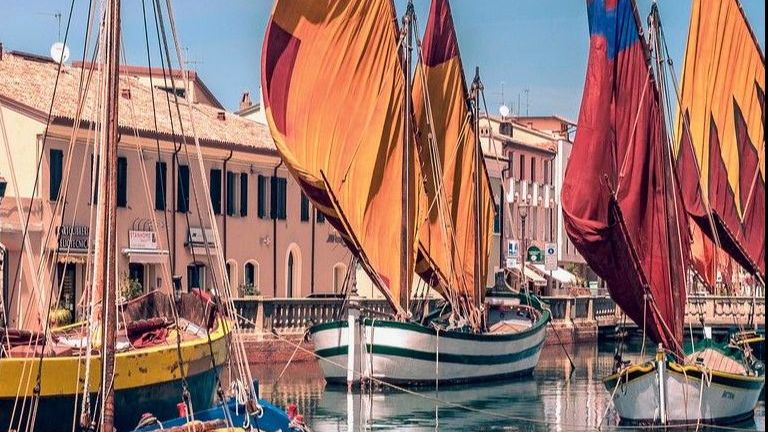
In Cesenatico, the Maritime Museum exhibits ten boats in the water in its Floating Section, complete with sails, which are lowered from Easter until October. And what makes the Floating Section unique in summer are precisely the sails, characterized by vibrant colors made with earth pigments and decorated with symbols representing the belonging to different fishing families.
The custom of painting sails is ancient; however, it was during the period of the last Adriatic sailing tradition that the decoration of lug sails on bragozzi, trabaccoli, topi, battane and other boats became a phenomenon of great historical and anthropological value, and later also a form of popular artistic expression. For a long time, in fact, these trapezoidal sails with the yard extending one-third forward of the mast (hence the name) were always colored with the characteristic ocher hues of natural earths (yellow, orange, and red), colors that ensured the best visibility of the sails at sea and greater safety in case of rescue.
The sails were dyed by mixing earth pigments with water and a binder, then distributed with a sponge over the designs. The fixing of the dye was important, which occurred by immersion in seawater.
The dyeing of the sails, in addition to protecting the canvas fibers, aimed to distinguish the boats through colors and the addition of alphabetical letters and symbols. Over time, the decorations became increasingly elaborate, giving rise to a true "heraldry of the sea," where each fishing family was proud of its sail, like ancient knights of their shield.
In Cesenatico, heated controversies arose over the use of the dolphin image. In addition to the most common symbols, such as the rising sun, religious ones like the cross and those linked to the surname or nickname of the boat captain were very widespread. Even today, in the ancient Squero of Cesenatico, a small dock within the canal port, one can admire the sails hoisted on the fishermen's houses.
The main decorations were the “gallone” (stripe), the “moccolo” (candle/flame), the “striscia” (strip), the “pappardella” (wide ribbon), the “tovaglia” (tablecloth), and the “tovaglioli” (napkins), symbols that were combined in case of marriage.
Finally, advertising depictions of product names and brands began to appear on the sails: a custom due to the use of boats for tourist transport.