The maritime tradition in Cesenatico
The seaside village of Cesenatico has ancient origins: its birth dates back, in fact, to the time of the Romans, whose archaeological remains are preserved in the Antiquarium museum. The city was founded in 1314 on a territory where traces of Ad Novas, a Roman settlement dating from the 2nd century BC to the 4th century AD, have been found. We can already find evidence of the seafaring tradition in the ancient Roman cuisine with the famous sauce garum, made with bluefish, the typical catch of the Adriatic Sea.
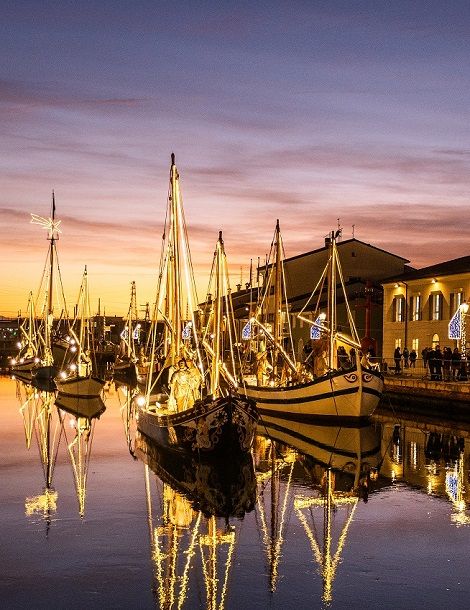
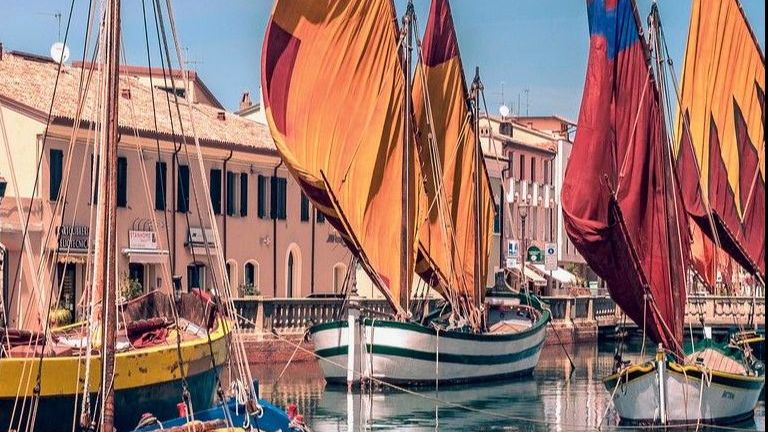
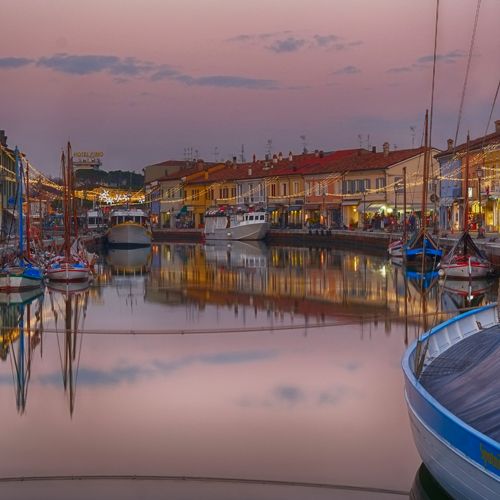
Its soul and traditions are therefore rooted in the sea and the lives of fishermen: there are countless testimonies of sea culture, scattered in every corner of the city. In its flavors, the fish cuisine; in its smells, the sea breeze; in its architecture, the Canal Port, the city's nerve center; in its art and history, the statue on the pier dedicated to the Wives of Sailors; and in its local traditions, the market and festivals dedicated to fish.
Curious to know more? Let's discover together how Cesenatico's maritime tradition has evolved over the centuries.
The Middle Ages: the maritime port is born
The origin of the current historic center dates back to the Middle Ages, and more precisely to 1302, the year in which, if one is to believe ancient chronicles, the city of Cesena, wanting to secure an outlet to the sea for its trade, began to dig the Canal Port and built a fortress to defend it.
A necessary precaution, because in the following two centuries the port, of strategic importance from a commercial and military point of view, was the scene of frequent struggles between lordships, after which it was repeatedly buried and destroyed. Porto Cesenatico remained in the hands of Cesena during the Malatesta period; during the brief interlude of Cesare Borgia's dominion, the “Duke Valentino“, the port was the object of attention from Leonardo da Vinci, the duke's engineer, who surveyed it with a view to future interventions. After a very brief Venetian dominion (of which traces remain in the two columns placed on either side of the bridge over the canal, read 5 unusual things to see in Cesenatico to find out more), Cesenatico passed to the Papal States for over three centuries.
Cesenatico in the 19th century: Garibaldi, Venice and the birth of bathing establishments
Only in 1827, after long claims, it obtained autonomy from Cesena. On August 2, 1849, it was the scene of Garibaldi's embarkation for besieged Venice, accompanied by Anita and other patriots: an event that later became a kind of "founding myth" for the new city identity after the birth of the unified state.
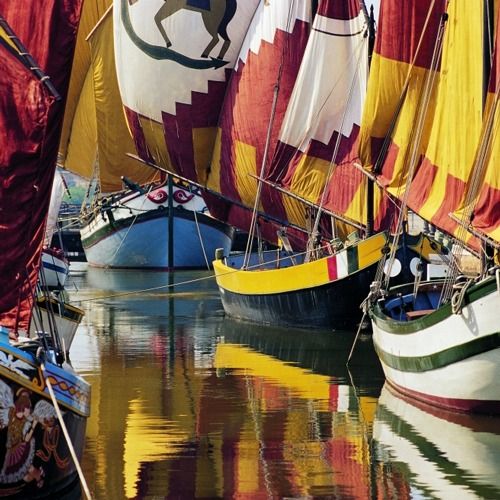
During the 19th century, fishing activity developed increasingly, also thanks to several families from Chioggia who came to settle in Cesenatico with their characteristic "bragozzi", today known as typical boats.
At the end of this century, the first bathing establishment was built and the beach began to be frequented by bathers. Aware of the importance of this new resource, the Cesenatico Administration promoted a careful subdivision of the sea area, granting free building plots for the construction of villas, which were built according to the taste of the era: Art Nouveau.
In a few decades, Cesenatico became a coveted tourist destination and also saw the rise of several colonies along with the first hotels.
Cesenatico and its growth as a renowned seaside resort in the 1950s
After the Second World War, with the end of small maritime transport, the new tourism industry saw Cesenatico at the forefront of promotion: the city, thanks to the economic development of those years, focused on urban regeneration, investing in some works that became undisputed symbols, such as the Skyscraper on the Lungomare.
From the 1970s onwards, a work of enhancement of its history and culture began, which, through various achievements, today constitutes, together with the sea and the beach, the best "calling card".
To fully immerse yourself in the city's seafaring life, follow the advice of the itinerary through maritime Cesenatico to visit all the places linked to the sea culture of the fishing village.
Photo credit for San Giacomo Church photo - Liana Marchetti